Showing Posts From
Rave outfits
- 28 Apr, 2026
What to Wear to EDC Las Vegas 2026: Rave and EDM Festival Outfit Ideas
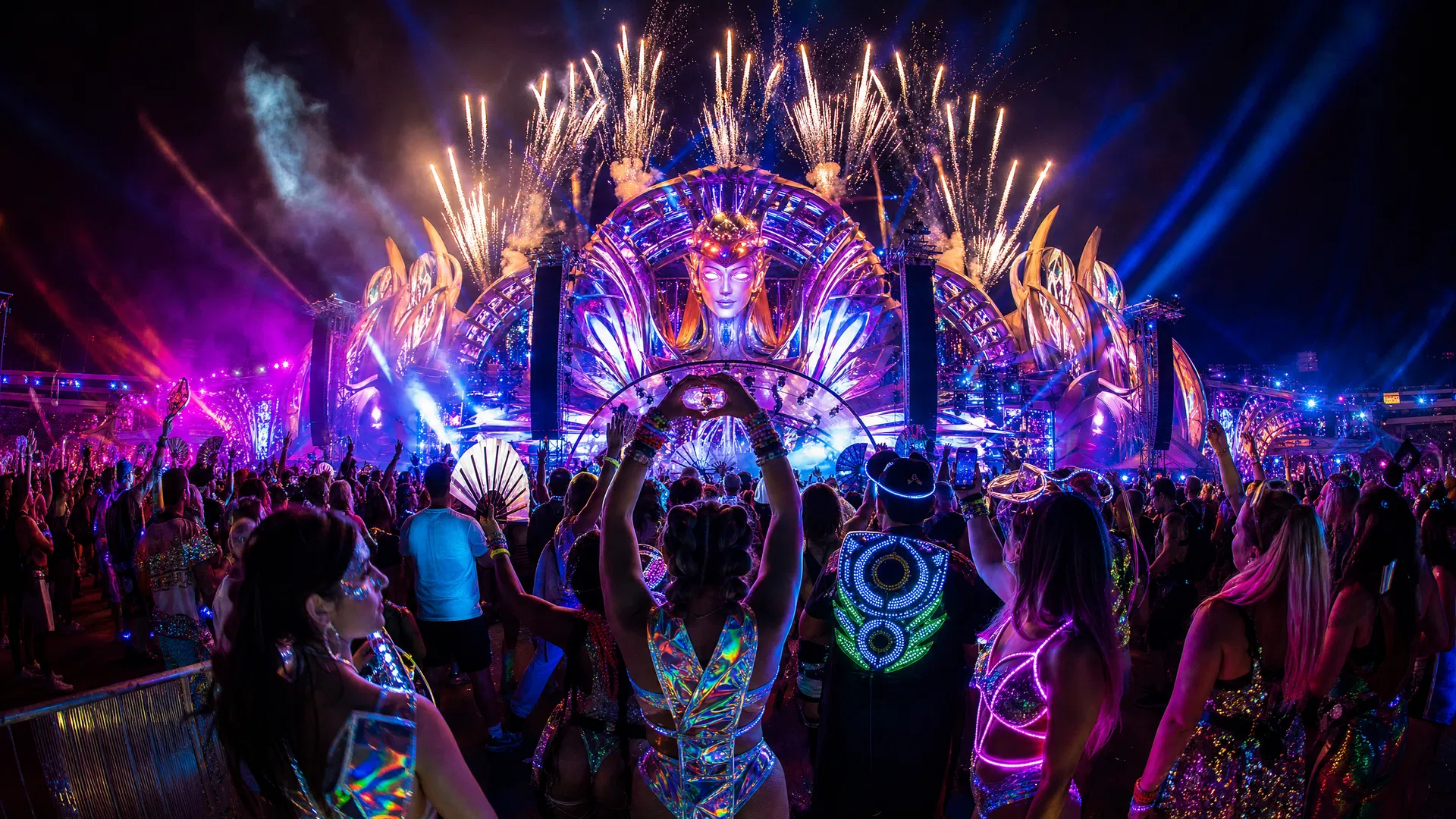
EDC Las Vegas is the largest electronic dance music festival in North America — and the 2026 edition was its 30th anniversary. Over 500,000 attendees gathered at Las Vegas Motor Speedway across May 15–17, 2026, making it one of the most attended music events in US history. Three nights, seven stages, and a sold-out crowd under the electric sky. The dress code is anything but restrained. EDC outfit culture is one of the most expressive on the festival calendar. At EDC, your outfit is a statement of belonging — to the music, to the community, and to a visual language that prizes bold color, self-expression, and the freedom to look however you want. This guide will help you build an EDC look that is eye-catching, comfortable for hours of dancing, and ready for the UV lights, the dark desert night, and whatever the weekend throws at you.The EDC Style Vibe EDC fashion has always leaned toward high-energy fantasy: neon bodysuits, holographic sets, reflective accents, and outfits that catch light in motion. But 2026 brought in a broader range of aesthetics — fairycore, cyber-rave, Y2K metallic, and futuristic minimalism are all equally at home on the EDC dance floor. The unifying thread is intentionality. The best EDC outfits look thought-out even if they come together from unexpected combinations. You are dressing for darkness, for movement, for UV lights, for phone cameras, and for an all-night timeline that starts at sundown and runs until sunrise.EDC Las Vegas 2026: The 30th Anniversary The 2026 edition carried the theme kineticJOURNEY — a tribute to the three decades Insomniac and the EDC community have traveled together. Sold-out three-day passes, a record-breaking 500,000 attendees, and a lineup that stretched across nine stages and more than 240 artists made this the most ambitious edition in the festival's history.2026 Headliners: Who Played EDC Las Vegas The kineticFIELD main stage lineup for 2026 was the strongest in several years. Martin Garrix, Charlotte de Witte, Tiësto, FISHER, Armin van Buuren, John Summit, Chris Lake, Zedd, Porter Robinson, Kaskade, The Chainsmokers, and Above & Beyond all played across the three nights. The range tells you something important about where EDC sits in 2026 — it is not a festival that picks a lane. Two standout bookings: Charlotte de Witte on the kineticFIELD was a statement set — she rarely plays stages this size, and watching her work a crowd of that scale in an open-air desert setting was unlike her usual club environment. John Summit, who has had an extraordinary run of form over the past two years, was near the top of every schedule. Elsewhere, The Prodigy on cosmicMEADOW was a proper moment — they rarely play North America, and their live show is relentlessly physical. The neonGARDEN delivered some of the deepest techno curation the festival has assembled, with Time Warp and Factory 93 takeovers featuring Peggy Gou, Joseph Capriati, Indira Paganotto, and Eli Brown.The Nine Stages of EDC Las Vegas 2026Stage Vibe 2026 HighlightskineticFIELD Main stage — LED production spectacle Martin Garrix, Tiësto, Charlotte de Witte, The ChainsmokerscosmicMEADOW Open field, eclectic bookings The Prodigy, Underworld, San Holo, Mau PneonGARDEN Dark techno/house tent Peggy Gou, Joseph Capriati, Time Warp, Factory 93bassPOD Heavy bass music Subtronics, Reaper, ATLienscircuitGROUNDS Peak-hour electronic Peak-hour sets, high-energy crowdquantumVALLEY Trance Paul van Dyk, DarudewasteLAND Hardstyle Hardstyle and industrialstereoBloom House Deep and melodic houseArt Car Stages Wanderer's circuit Intimate sets scattered across the groundsNotable B2Bs across the weekend: GRiZ and Wooli, Eptic and Space Laces, Walker & Royce alongside VNSSA, and Laidback Luke with Chuckie.Key EDC Outfit Trends for 2026UV-reactive neon — electric blue, neon green, hot pink, and highlighter yellow that pop under black lights Holographic and iridescent fabrics — anything that shifts color in motion Metallic bodysuits and sets — silver, gold, chrome, and copper in structured or fluid silhouettes Fairycore and ethereal layering — sheer mesh layers, floral appliqués, soft wing details, iridescent skirts over bodysuits Cyber-rave and futuristic styling — reflective joggers, industrial-style harnesses, geometric cutouts Matching rave sets — top-and-bottom coordinates in the same print, metallic, or neon colorway Mesh and sheer layering — over bodysuits, over shorts, over anything; adds visual dimension without overheatingComplete Outfit Ideas for Women Look 1: UV Neon Night A neon bodysuit in electric blue, hot pink, or highlighter green — something that will genuinely glow under UV lights. Pair with high-waisted iridescent or holographic shorts, platform sneakers or chunky boots, and a matching neon fanny pack or mini backpack. Body-safe holographic glitter on the collarbone and shoulders finishes the look. Look 2: Holographic Fantasy A holographic or iridescent matching set — crop top and high-waisted shorts or a mini skirt — in silver, rose gold, or prismatic rainbow. Layer a sheer mesh cardigan or kimono over the top for added visual texture. Platform boots in silver or white, and chrome or mirror-lens sunglasses. Add stick-on rhinestones or face gems for extra sparkle. Look 3: Fairycore EDC A sheer or mesh long-sleeve top over a bedazzled or embellished bralette and high-waisted shorts. Add a flowing mini skirt or iridescent tutu layer over the shorts for movement. Flat platform sneakers in white or metallic, butterfly or floral accessories, and layered delicate jewelry. Pastel or soft iridescent color palette. Look 4: Cyber Rave A reflective or metallic bodysuit paired with wide-leg reflective joggers or vinyl-look trousers. Industrial-style PVC or mesh accessories — a utility harness, structured mini bag, or arm wraps. Chunky platform sneakers or futuristic boots. LED accessories or a light-up fanny pack take this look to the next level. Look 5: Matching Set Minimalist A clean rave-ready matching set in a single bold color — magenta, cobalt, or emerald — with simple design details that let the color do the work. Neutral platform sneakers for comfort, a hydration pack, and minimal statement accessories. Simple, effective, and highly photographable.Complete Outfit Ideas for Men Look 1: Rave-Ready Graphic A bold graphic tee or festival jersey in a neon or oversized print paired with reflective joggers or statement festival shorts. Comfortable sneakers built for hours of dancing. A neon fanny pack, UV-reactive accessories, and a simple bucket hat or baseball cap round it out. Look 2: Metallic Statement A metallic or iridescent button-down shirt worn open over a solid-color tank, paired with dark joggers or slim festival pants. White or silver sneakers, a mini backpack, and reflective or chrome sunglasses. This look is put-together without being overly costumed. Look 3: Matching Festival Set A coordinated two-piece set — shorts and a matching tank, bomber, or short-sleeve shirt — in a bold print, neon colorway, or holographic fabric. Platform sneakers or chunky trainers. A lightweight hydration vest or backpack keeps the look practical for the long night.Gender-Neutral Outfit IdeasThe Neon Layer: Any base outfit elevated by one UV-reactive or neon piece — a jacket, a vest, a pair of shorts. Build around one statement color. The Matching Set: Two-piece coordinates in a bold colorway or holographic fabric. The easiest way to look intentional without over-planning. Cyber Utility: Dark base (black shorts, black tank) with reflective, metallic, or iridescent accessories — harness, arm bands, holographic fanny pack. Low effort, high visual impact. The Mesh Layer: Any outfit made more interesting by a sheer or mesh layer on top — shirt, kimono, or cardigan. Works over virtually any base and adds dimension in both natural light and UV.Footwear for EDC: Comfort Comes First You will dance for hours at EDC. The footwear decision is not primarily aesthetic — it is a physical endurance choice. Best options:Platform sneakers — the gold standard; cushioned, stable, elevated silhouette that photographs well Chunky trainers — maximum cushioning for long nights; pick a bright or reflective colorway to keep them on-theme Platform boots (ankle or knee-high) — great for the silhouette and the aesthetic; make sure the platform is stable and the fit is broken in LED or light-up sneakers — functional accessory and outfit piece in one Trail or festival sneakers — if comfort is the absolute priority and aesthetics are secondaryAvoid:Heeled sandals with no ankle support Brand-new footwear worn to the event for the first time Open-toe sandals or flip-flops on the main dance floors — it gets crowded and feet get stepped onAccessories That Make the EDC Outfit At EDC, accessories are often the most remembered part of the look.Hydration packs — practically mandatory for a full-night festival in the desert; small, streamlined backpack styles with a water bladder Sunglasses — holographic, mirror-lens, or wraparound; useful for the late-sunset arrival and genuinely UV-protective LED accessories — bracelets, rings, masks, and gloves that add light-up detail to any outfit Body-safe glitter — bio-safe loose glitter or glitter gel for face, collarbone, and shoulders; looks extraordinary under stage lighting Fanny packs and mini bags — hands-free storage is essential; choose one that complements the outfit colorway Face gems and rhinestones — peel-and-stick rhinestones applied to cheekbones, temples, and collarbones are one of the most photogenic EDC beauty moves Glow kandi bracelets — the EDC trading tradition; build a stack and trade throughout the weekendWeather-Smart Layering for EDC EDC Las Vegas in May means afternoon heat during arrival that transitions into warm nights with the occasional desert breeze.Arrive in a lighter version of your outfit; you will be standing in the sun during load-in Once the sun sets, temperatures are warm but a light jacket or zip-up can make the post-3 AM hours more comfortable A compact packable jacket or windbreaker that fits into your hydration pack is the smartest layer to bring Avoid heavy fabrics that hold sweat — moisture-wicking or synthetic materials breathe better than cotton for high-energy dancingWhat Not to Wear to EDCFragile or delicate pieces that cannot handle a crowd — anything precious or irreplaceable stays home Stilettos or narrow-heel shoes on any terrain Full face coverage or masks that create visibility or safety issues Anything that restricts your ability to move freely for hours Glitter that is not explicitly body-safe or bio-safe — conventional craft glitter can cause eye and skin irritation Brand-new shoes worn straight to the festival floorEDC Las Vegas Packing ChecklistMain outfit for each night (3 nights = 3 looks) Platform sneakers or comfortable boots Hydration pack Body-safe glitter and face gems LED accessories (bracelets, rings) Sunglasses with UV protection Fanny pack or mini backpack per night Kandi bracelets for trading Packable jacket or windbreaker Blister bandages Portable phone charger SPF for arrival/daytime hours Earplugs (hearing protection at high volumes) Refillable water bottle or water bladder Small first aid essentialsRelive EDC Las Vegas 2026 — 30th Anniversary Missed the milestone weekend or want to revisit the sets? The official aftermovie and full live performances are available to watch now:EDC Las Vegas 2026 Official Aftermovie — Insomniac's cinematic look back at the 30th anniversary weekend The Chainsmokers Live at EDC Las Vegas 2026 — Full set from one of the weekend's standout performancesEDC 2026 Global Tour — The Party Continues Following the sold-out Las Vegas flagship, the Electric Daisy Carnival continues its 2026 world tour:Event Dates Venue TicketsEDC Korea October 3–4, 2026 Seoul electricdaisycarnival.comEDC Colombia October 10–11, 2026 Bogotá electricdaisycarnival.comEDC Orlando November 6–8, 2026 Tinker Field, Orlando EDC Orlando tickets from ~$280Start Building Your EDC Look Now EDC outfits take longer to pull together than they look. Shipping times for rave wear, sourcing the right holographic pieces, and breaking in new footwear all need runway. Start planning your three-night looks early and shop RaveShax's rave outfit collection, EDC accessories, and festival footwear guide to build each look with intention rather than last-minute panic.EDC Las Vegas 2027: Dusk Till Dawn 🌼 Big news for owls: EDC Las Vegas is returning in 2027 — and this time it splits into two weekends. Insomniac announced the new format as EDC Dusk and EDC Dawn, giving fans the option to attend one or both.Weekend Dates GA Starting PriceEDC Dusk May 14–16, 2027 $399 all-inEDC Dawn May 21–23, 2027 $399 all-inEDC Dusk & Dawn (both weekends) May 14–16 + May 21–23 $599 all-inFuture Owl Presale opens Friday, May 22 at 12pm PT — just a $5 deposit to lock in your spot, with no further payments until July. If you are planning your 2027 rave wardrobe, this is the moment to secure your ticket before general sale prices rise. Get your Future Owl presale ticket →Frequently Asked Questions: EDC Outfits What should I wear to EDC Las Vegas? A bold, expressive outfit designed for night-time dancing under stage lighting. Neon, holographic, and metallic fabrics show up beautifully in EDC's visual environment. Prioritize comfort for your footwear and bring a hydration pack. What colors work best for EDC outfits? UV-reactive neons — electric blue, hot pink, neon green — light up under black lights. Holographic and iridescent fabrics shift dramatically under stage lighting. Both are excellent choices. What shoes should I wear to EDC? Platform sneakers are the most popular choice: comfortable, stylish, elevated, and built for hours of dancing. Chunky trainers are the maximum-comfort alternative. Avoid anything without ankle support or with a narrow heel. Can I bring a bag to EDC? Yes — a compact hydration backpack or fanny pack is standard EDC kit. Check the current EDC Las Vegas bag policy on the official event site before the event, as specifics may update year to year. Is body glitter allowed at EDC? Body-safe and bio-safe glitter is permitted and very common at EDC. Do not use standard craft glitter — it can cause eye and skin irritation. Look for cosmetic-grade or bioglitter products specifically formulated for skin use. How do I dress for all three EDC nights? Plan a distinct look for each night — many attendees build around a different color palette or aesthetic per night. Having three complete looks planned in advance avoids the stress of assembling an outfit the morning of. Is there a dress code at EDC? No formal dress code. Self-expression is celebrated. The culture is welcoming and non-judgmental — wear whatever makes you feel most yourself, as long as it covers the essentials and lets you move freely.
-
 RaveShax Editors
 - 24 Apr, 2026
Breakaway Arizona 2026: Lineup, Set Times, What to Wear & Everything You Need to Know
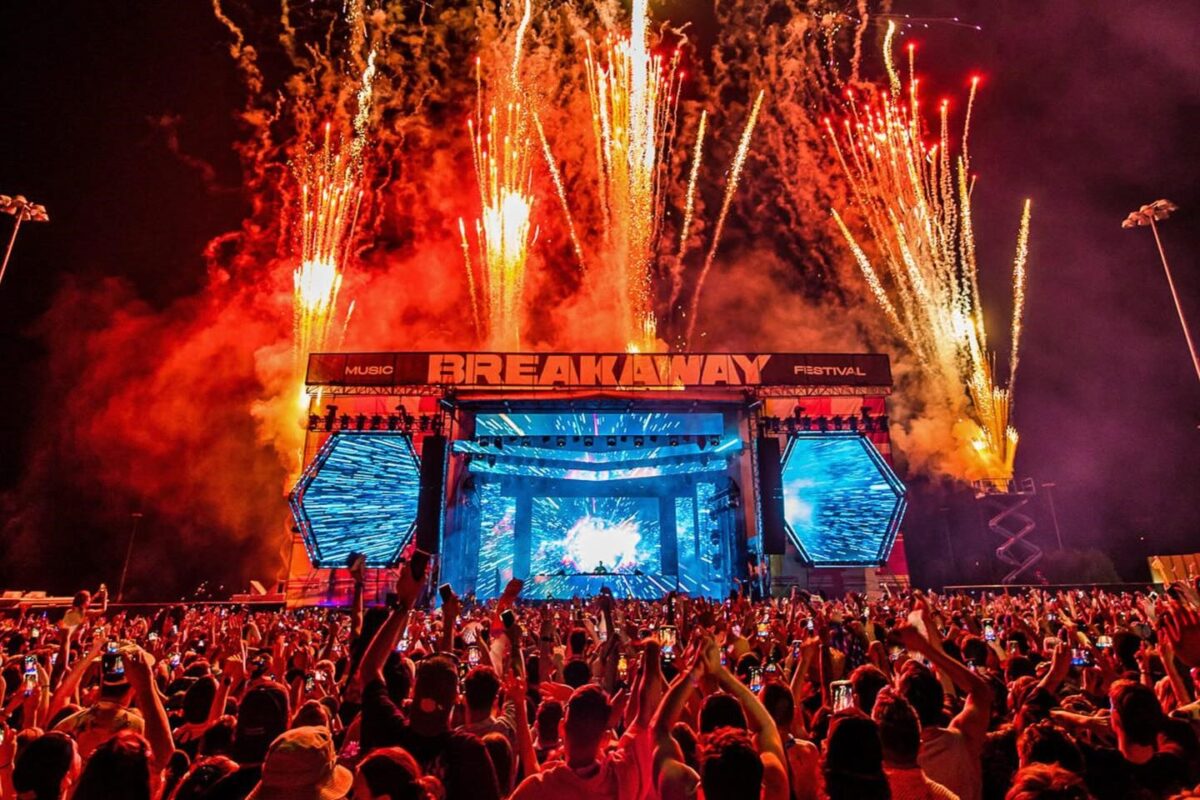
Breakaway Arizona 2026 is happening right now — April 24–25 at Sloan Park Festival Grounds in Mesa. The nation's largest touring music festival is back in the Valley for its second year, and the lineup is the biggest yet: Marshmello, Kygo, Loud Luxury, ISOxo, and James Hype headlining across two stages over two nights. Whether you're already on your way to Sloan Park or watching the lineup from home and planning your next Breakaway city, here's everything you need to know.The Lineup: Who's Playing Breakaway Arizona 2026 Breakaway Arizona runs two stages — the Main Stage and The L.A.B (Leave it All Behind) — across both days. Friday, April 24 Main StageMarshmello — 8:45–10:00 PM (headliner) ISOxo — 7:30–8:30 PM Loud Luxury — 6:20–7:20 PM MPH — 5:25–6:15 PM Xandra — 4:30–5:20 PM Arthi — 3:40–4:25 PM LIVVIEP — 3:00–3:40 PMThe L.A.B StageGrabbitz — 7:40–8:40 PM Mersiv — 6:35–7:35 PM Truth — 5:40–6:30 PM Jon Casey — 4:45–5:35 PM Shima — 3:55–4:40 PMSaturday, April 25 Main StageKygo — headliner James Hype Dr. Fresch Habstrakt Cassian Angrybaby AlignThe L.A.B StageDisco Dom (Dombresky) Effin Steller Delato LeeshThe Venue: Sloan Park Festival Grounds, Mesa AZ Sloan Park is the spring training home of the Chicago Cubs — a 15,000-seat stadium with surrounding festival grounds that Breakaway has transformed into a two-stage outdoor festival space. The address is 2330 W Rio Salado Pkwy, Mesa, AZ 85201. Getting there: Mesa Gateway Airport (AZA) and Phoenix Sky Harbor (PHX) are both within 20–40 minutes by rideshare. There is no official shuttle service, so plan your rideshare in advance — Uber and Lyft surge pricing is common during festival hours. Tickets: Starting at $159 for GA 2-day passes. Single-day and VIP options available at breakawayfestival.com.The Afterparties The official Breakaway AZ afterparties are in Old Town Scottsdale, running 9 PM–2 AM on both nights. Friday, April 24MPH at MAYA Dayclub (21+)Saturday, April 25Dr. Fresch at Cake Nightclub (21+) Disco Dom at MAYA (21+)Afterparty tickets are available separately through the Breakaway website. Old Town Scottsdale is approximately 15 minutes from Sloan Park by rideshare.What to Wear to Breakaway Arizona 2026 Breakaway Arizona in late April means warm days (highs around 85°F) and cooler nights (lows around 65°F). The dress code is festival-forward — this is not a warehouse techno event. Think color, movement, and layering for the temperature drop after sunset. The Daytime Look (3–7 PM) The afternoon sets at Breakaway AZ are in full Arizona sun. Prioritize breathable fabrics and sun protection without sacrificing the aesthetic. For women: A festival bodysuit or two-piece set in a bold print, worn with high-waisted shorts or a skirt. A mesh cover-up or lightweight kimono for sun protection. Comfortable platform sandals or sneakers. For men: A camp shirt or printed short-sleeve in a lightweight fabric, worn with festival shorts or cargo pants. A mesh tank underneath for the hottest hours. Comfortable sneakers or boots. Both: Sunscreen, a hat or bandana, and sunglasses are non-negotiable. Arizona sun is not forgiving. The Nighttime Look (7 PM–Close) As the headliners take the stage, the temperature drops and the lights come on. This is when the festival look shifts into rave mode. For women: Layer a cropped jacket or festival kimono over your daytime look. Add UV-reactive accessories — neon kandi, glitter, or light-up elements — for the strobe-lit main stage experience. For men: Add a statement overshirt or lightweight jacket. A chest harness over a plain tank works well for the L.A.B stage's more underground energy. Swap sandals for boots if you haven't already. The Breakaway AZ Color Palette Breakaway Arizona leans warm — desert tones, sunset oranges, and neon accents all read well in the Arizona landscape. UV-reactive pieces hit differently under the main stage lights at night. The festival's aesthetic is inclusive and expressive: there is no wrong answer, but there is a right energy.Festival Essentials: What to Bring Breakaway AZ is an outdoor festival in the Arizona desert. These are the non-negotiable items:Item Why You Need ItSunscreen (SPF 50+) Arizona April sun is intense; reapply every 2 hoursPortable phone charger 8+ hours of navigation, photos, and Uber callsReusable water bottle Hydration stations are available; stay ahead of the heatLight jacket or layer Temperature drops 20°F after sunsetComfortable shoes You're dancing for 6+ hours; break them in firstSmall crossbody bag or fanny pack Keeps hands free; fits phone, ID, cards, and essentialsKandi PLUR culture is alive at Breakaway; trade on the floorProhibited items include outside food and beverages, professional cameras with detachable lenses, umbrellas, and weapons of any kind. Full prohibited/permitted items list is available on the Breakaway AZ FAQ page.The Artists: Who to Watch Marshmello (Friday Headliner) Marshmello is one of the most recognizable acts in electronic music — the white helmet is as iconic as the drops. His Breakaway AZ set will be a crowd-pleasing mix of his biggest singles and festival-ready edits. If you're at Sloan Park on Friday, the main stage at 8:45 PM is where you need to be. Kygo (Saturday Headliner) Kygo's tropical house sound is perfectly matched to the Arizona desert at night. His live sets incorporate full production — piano, live percussion, and a visual show that rewards being close to the stage. Saturday's headliner slot is one of the most anticipated sets of the weekend. ISOxo (Friday) ISOxo has been one of the most talked-about names in bass music over the past two years. His sound sits at the intersection of hyperpop, dubstep, and experimental electronic — expect a set that sounds unlike anything else on the bill. Loud Luxury (Friday) The Canadian duo's deep house and tech house sound has been a festival staple since "Body" went viral in 2018. Their Breakaway AZ set will be a high-energy crowd pleaser. James Hype (Saturday) The UK DJ and producer is one of the hottest names in commercial house right now. His remix of "Ferrari" has over a billion streams, and his festival sets are known for their energy and crowd interaction. Grabbitz (Friday, L.A.B) Grabbitz is the most genre-fluid act on the Friday bill — his sound incorporates rock, hip-hop, and electronic music in a way that consistently surprises. The L.A.B stage is the right environment for his set. Mersiv (Friday, L.A.B) Mersiv's psychedelic bass music is built for the underground stage. If you want to experience the deeper, more experimental side of Breakaway AZ, the L.A.B stage during Mersiv's set is the place to be.Breakaway Arizona 2026: The Bigger Picture Breakaway is the nation's largest touring music festival, running 12 cities across 2026. The Arizona stop is the third of the year — following Dallas (April 10–11) and Tampa (April 17–18) — and the first to feature Kygo on the bill. The festival's model is deliberately different from destination festivals like EDC or Coachella: rather than requiring attendees to travel to a fixed location, Breakaway brings the festival to your city. The result is a more accessible, community-focused event that draws heavily from local audiences. 2026 Breakaway Tour Dates:Date CityApril 24–25 Arizona (Sloan Park, Mesa)May 15–16 AtlantaMay 29–30 OhioJune 12–14 Las VegasJune 26–27 MinnesotaJuly 17 New York CityAugust 14–15 MichiganAugust 21–22 MassachusettsSeptember 11–12 PhiladelphiaSeptember 25–26 CarolinaOctober 2–3 UtahNovember 13–14 HoustonFAQ: Breakaway Arizona 2026 What are the festival hours? Gates open at 3:00 PM on both days. The final headliner set ends at approximately 10:00–10:30 PM. What is the age restriction? The festival is 18+. The Space Deck VIP experience requires 21+. Can I re-enter the festival? Re-entry policies are confirmed on the day of the event. Check the Breakaway AZ FAQ page for the most current information. Is parking available? Limited parking is available near Sloan Park. Rideshare is strongly recommended — plan your pickup location in advance as rideshare demand surges at the end of the night. What is the VIP experience? The Space Deck is Breakaway's premium VIP experience — an elevated multi-level platform with a direct sightline to the main stage. Table inquiries and pricing are available at breakawayfestival.com. Are there afterparties? Yes — official afterparties at MAYA and Cake Nightclub in Old Town Scottsdale on both nights. Separate tickets required.
- RaveShax Editors
- 19 Apr, 2026
DIY Rave Outfits: The Complete 2026 Guide (Every Style, Every Budget)
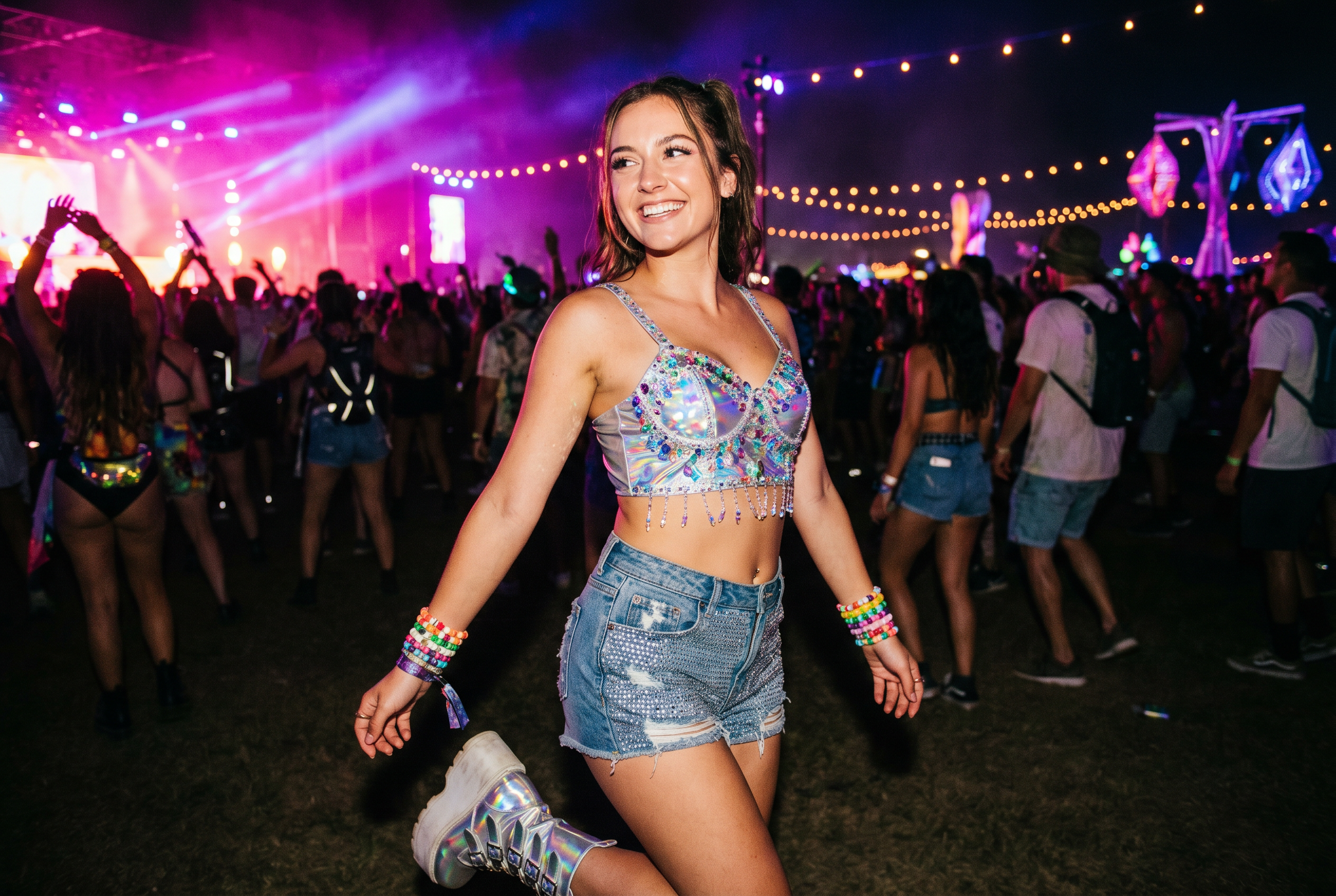
The best outfit at EDC was always handmade. Not because buying is wrong — but because the floor rewards intention, and nothing communicates intention like something you built yourself. In 2026, DIY rave fashion is having its biggest moment in a decade: the aesthetics are more defined, the materials are more accessible, and the cultural permission to go as far as you want has never been broader. The internet hasn't kept up. Most DIY rave guides still recommend flower crowns and basic fishnets from 2018. This guide doesn't. It covers every current aesthetic, every skill level, and every budget — from a $15 thrift flip to a $150 custom build. By the end, you'll have a complete plan for your next look. What Makes a DIY Rave Outfit Actually Work in 2026 Before you buy a single piece of fabric, you need a mental model. A great DIY rave outfit isn't just visually striking — it survives eight hours of dancing, reacts to blacklight, photographs well, and feels like you. Those four criteria are your filter for every decision. The 2026 Rave Aesthetic Landscape: Which Visual Language Is Yours? Five major aesthetic clusters are defining rave fashion right now. Each has a distinct DIY entry point: Y3K Futurism — Chrome, holographic, and metallic finishes. The aesthetic is post-human and maximalist. DIY entry: chrome body paint + holographic spandex base layer. Fantasycore — Crochet, fiber optics, mushroom prints, and forest-nymph silhouettes. Dominant at Electric Forest 2025. DIY entry: handmade crochet bralette + fairy lights threaded into a sheer cape. Neo-Cyberpunk — Black bases, neon accents, hardware buckles, and reflective chrome. The Ultra Miami aesthetic. DIY entry: black base layer + hardware-store buckles + neon tape details. PLUR Maximalism — UV-reactive layers, Kandi stacks, tie-dye, and color-saturated everything. The classic rave DIY aesthetic, now evolved with 3D Kandi and NFC beads. DIY entry: UV-spray denim + Kandi cuffs + glow accessories. Techno Minimalism — All-black, structural, and restrained. The Berlin warehouse aesthetic. DIY entry: military surplus thrift flip + chest harness as the single statement piece. The Four Non-Negotiables: Movement, Light, Durability, and You Movement: You're dancing for eight or more hours. Anything that restricts your range of motion, rides up, or needs constant adjustment will ruin your night. Test every DIY piece before the event — dance in it, crouch in it, raise your arms. Light: Rave environments cycle between UV blacklight, colored stage wash, and near-total darkness. UV-reactive fabrics, reflective materials, and LED elements all behave differently under each. Build your look to perform in all three. Durability: Sweat, crowd contact, and hours of movement will stress every seam, adhesive, and embellishment. Use fabric glue rated for stretch fabrics. Heat-set rhinestones rather than gluing them. Test your construction before the event. You: The most important filter. A look that doesn't feel like you will feel like a costume. The best DIY rave outfits are extensions of identity, not performances of a trend.No-Sew DIY Rave Outfits: Start Here If You've Never Made Anything Before No sewing machine required. The no-sew approach uses thrift finds, fabric glue, iron-on elements, and body accessories to build a complete look. It's the highest-volume DIY method for a reason: it's fast, cheap, and forgiving. The Thrift Flip: Building Your Base Layer for Under $20 Goodwill, Depop, and ThredUp are your first stop. What to look for: mesh tops and dresses (any color — you're going to cut and customize them), lycra or spandex pieces in any condition, fishnet tights in multiple sizes (worn as tops, skirts, or layering pieces), and any bodysuit in a solid color. What to skip: anything with heavy structure (blazers, denim jackets) that won't move with you, delicate fabrics that will shred under embellishment, and anything that fits poorly in the shoulders — that's the hardest thing to fix without sewing. The cut is your most powerful no-sew tool. A mesh dress becomes a layering piece. A t-shirt becomes a crop. Fishnet tights become a top when you cut off the waistband and step into the leg holes. Scissors and confidence are your primary tools. Embellishments That Do the Heavy Lifting: Rhinestones, Iron-Ons, and Fabric Paint Rhinestones: Use E6000 fabric adhesive for flat-back rhinestones on stretch fabric. Apply in small sections and let cure for 24 hours before wearing. For UV-reactive looks, source UV-reactive rhinestones from Etsy sellers — they're widely available and photograph dramatically under blacklight. Heat-transfer vinyl (HTV): Requires an iron or heat press. Works on cotton, polyester blends, and some spandex (test first). Available in holographic, chrome, neon, and UV-reactive finishes from craft stores and Amazon. A small piece of holographic HTV on a plain bralette transforms it completely. UV-reactive fabric spray: Tulip and Jacquard both make UV-reactive fabric paint that works on most fabrics. Apply in patterns, gradients, or all-over coverage. Dries flexible and survives washing. One of the most cost-effective ways to make any thrift piece glow. Puff paint: Underrated for rave use. Adds texture and dimension to flat fabric. Use it to create raised geometric patterns, write phrases, or outline shapes. Dries overnight and holds up well to movement. No-Sew Assembly: Three Complete Looks You Can Build Tonight Look 1 — UV Mesh Maximalist: UV-reactive mesh crop top (thrift or Amazon, ~$8) + black high-waist shorts + UV-reactive rhinestone detail across the collarbone (E6000 + rhinestones, ~$6) + Kandi stacks + platform boots. Total: ~$30–$45. Look 2 — Chrome Minimalist: Black bodysuit (thrift or Amazon basics, ~$10) + holographic HTV geometric detail on the chest (iron-on, ~$5) + silver hardware belt (thrift, ~$4) + black fishnet tights + chunky boots. Total: ~$25–$40. Look 3 — Fantasycore Fairy: White or cream mesh dress (thrift, $6) + UV-reactive fabric spray in pastel gradient ($8) + clip-in fairy lights threaded through the mesh ($10) + flower crown with EL wire woven in ($12) + white platform sneakers. Total: ~$40–$55.Intermediate DIY Rave Outfits: Sewing, Sourcing, and Building Something Memorable If you have basic sewing skills — or access to a machine — you can build pieces that no thrift store will ever have. The intermediate approach is about fabric sourcing, simple construction, and one signature piece that anchors your entire look. Fabric First: UV-Reactive, Holographic, Mesh, and Stretch — Where to Source Each Spandex World (spandexworld.com): The best online source for stretch fabrics in bulk. UV-reactive spandex, holographic lycra, and metallic stretch all available by the yard. Order swatches before committing. Etsy: The best source for specialty rave fabrics — UV-reactive mesh, custom-printed spandex, and holographic organza from small sellers who understand what you're building. Search "UV reactive fabric" or "holographic spandex yard." Fabric.com: Good for basics — stretch mesh, swimwear lining, and standard spandex. Less specialty than Spandex World but faster shipping and reliable quality. Stretch percentage matters: For bodysuits and anything worn close to the body, you want at least 50% stretch in both directions. For skirts and capes, less stretch is fine. Check the product description before ordering. Simple Patterns Worth Mastering: Triangle Top, Wrap Skirt, and the DIY Bodysuit Triangle top: Two triangles of fabric, two ties, and a back strap. The simplest possible construction. Dozens of free patterns on Pinterest and YouTube. In holographic or UV-reactive fabric, it's a complete statement piece. Wrap skirt: A rectangle of fabric with two ties at the waist. No pattern required — measure your hip circumference, add 12 inches, cut to your desired length, hem the edges, and attach ties. Takes 30 minutes with a machine. DIY bodysuit: More complex but worth learning. Free patterns from Evelyn Wood Designs and Patterns for Pirates are beginner-friendly. In UV-reactive spandex, a custom bodysuit is the single most impactful DIY piece you can build. The DIY Harness: One of the Most Worn Rave Accessories, and It's Easier to Make Than You Think A body harness is one of the most versatile DIY rave accessories you can build — it layers over anything, fits any aesthetic, and communicates exactly the energy you want to bring to the floor. Materials: 1-inch elastic or pleather strapping (3–4 yards), O-rings or D-rings in silver or black (8–12 pieces), a rivet setter or strong fabric glue, scissors. Total cost: $15–$25 from a leather supply store or Amazon. Basic construction: Cut strapping into sections — two shoulder straps, one chest band, two waist bands. Connect at intersections with O-rings, looping the strap through the ring and securing with rivets or glue. Fit on your body and adjust before final securing. Sizing note: Measure your chest and waist before cutting. Add 4 inches to each measurement for overlap at the ring connections. For plus-size builds, increase strap length proportionally and use larger O-rings (1.5-inch) for a cleaner look.DIY Rave Outfits by Aesthetic: Build the Look That Matches Your Scene This is the core of the guide. Each aesthetic has a specific DIY approach — materials, techniques, and the one piece that makes it read correctly. Y3K Futurism: Metallic, Holographic, and Chrome-Finish DIY Looks The Y3K aesthetic is built on the idea that the future is already here and it's wearing chrome. Materials: holographic spandex for the base, chrome vinyl for accents, metallic bodysuit as the foundation. DIY focal point: Chrome body paint (Mehron Metallic, ~$12) applied to the shoulders and collarbone over a holographic bodysuit creates a seamless chrome-to-fabric transition that photographs like a fashion editorial. Pair with silver platform boots and minimal accessories — the chrome does the work. Accent technique: Cut geometric shapes from chrome vinyl (available at craft stores) and apply to an existing black bodysuit using fabric adhesive. Triangles, chevrons, and asymmetric panels all work. The contrast between matte black and reflective chrome is the visual engine of this aesthetic. Fantasycore: Crochet, Fiber Optics, and the Electric Forest DIY Electric Forest 2025 established Fantasycore as a fully realized aesthetic genre — and it's the most technically rewarding DIY category because handmade materials are the point. A store-bought Fantasycore look misses the entire message. Crochet bralette: Free patterns are widely available on Ravelry and YouTube. Use cotton or acrylic yarn in cream, sage, or dusty rose. The skill level is beginner-to-intermediate. A completed bralette takes 4–6 hours and costs under $10 in materials. Fiber optic cape: Purchase pre-made fiber optic fabric from Amazon (~$25–$40 for a yard) and cut to your desired cape shape. Hem the edges with fabric glue. The fiber optic strands are integrated into the fabric and connect to a small battery pack at the hem. Wear over a crochet bralette and high-waist shorts for the complete Forest look. Mushroom print: Etsy sellers offer custom mushroom-print spandex by the yard. Use it for a wrap skirt or wide-leg pants paired with the crochet top. The print signals Forest fluency immediately. Neo-Cyberpunk: Black, Neon, Hardware, and the Ultra Miami Aesthetic Ultra Miami rewards the edit. The Neo-Cyberpunk DIY approach is the fastest of all five aesthetics because most components are found items and hardware store picks — no sewing required. Base layer: Any black bodysuit or black crop top + black high-waist shorts or leggings. The base should be completely matte — avoid anything with sheen at this stage. Hardware: Visit a leather supply store or hardware store for buckles, D-rings, and speed clasps. Attach to existing garments using Chicago screws (no sewing) or strong fabric adhesive. A single hardware-accented belt transforms a plain black outfit into a cyberpunk statement. Neon accent: One piece of neon — a single neon strap, a neon waistband, or neon tape applied to boots — is all this aesthetic needs. Restraint is the point. The neon should feel like a system error, not a decoration. Reflective element: Chrome mini-skirt (thrift or Amazon, ~$20) worn over black leggings. Under stage lighting, it reads as liquid mercury. Under blacklight, it disappears into the dark — which is exactly right. PLUR Maximalism: Kandi-Everything, UV Reactive Layers, and the Colorful Classic PLUR Maximalism is the most community-coded of all rave aesthetics — and the most forgiving for DIY beginners because the look is built on accumulation rather than precision. UV-reactive base: Start with a white or neon base layer and apply UV-reactive fabric spray in your chosen color palette. Tie-dye technique works well here — scrunch the fabric, apply spray in sections, let dry. The result is unique to you. Kandi stacks: Make your own singles using pony beads and elastic cord. Standard singles are 30–35 beads on a 12-inch cord. For 3D Kandi Cubes, search YouTube for "3D Kandi cube tutorial" — the construction is geometric and satisfying. NFC-integrated Kandi (with embedded NFC chips from Amazon) turns your handmade pieces into digital business cards. Layering: UV-reactive fishnet over the base layer, Kandi stacks on both wrists and upper arms, UV-reactive face gems, and a UV-reactive hair accessory. The look is built in layers — each one adds to the whole. Techno Minimalism: The Berlin DIY Look That's All About Restraint Techno Minimalism is the hardest aesthetic to DIY because the quality of the edit matters more than the quantity of the pieces. One wrong element breaks the entire look. Thrift strategy: Military surplus stores and workwear thrift sections are your primary sources. Cargo pants, structured black jackets, and industrial-cut trousers all work. Look for pieces with interesting hardware, unusual seaming, or structural details — not decoration. The single statement piece: A chest harness (DIY using the instructions above, or sourced from a leather goods store) worn over a plain black long-sleeve top is the complete Techno Minimalist look. Nothing else is needed. Add black platform boots and you're done. What not to add: No color. No rhinestones. No prints. The discipline of this aesthetic is the point — every addition weakens it.DIY Rave Accessories: The Details That Elevate Any Outfit Accessories are the highest-leverage DIY opportunity at any budget. A basic outfit becomes a standout look with the right finishing touches. Kandi: Making, Trading, and Stacking the Culture Kandi is the most community-embedded DIY practice in rave culture. Making your own singles — single-strand bracelets traded in the PLUR handshake — is a rite of passage. The materials are cheap (pony beads and elastic cord, ~$8 for 200 singles' worth of materials), the technique is simple, and the cultural weight is enormous. 2025–2026 evolution: 3D Kandi Cubes are the dominant structural innovation — geometric, multi-dimensional constructions worn as wrist sculptures. NFC Kandi (beads with embedded NFC chips that link to your social profile when tapped) turns the physical trade into a digital handshake. "Unhinged Kandi" — absurdist phrases replacing traditional PLUR messages — has become one of the most-shared categories of rave content online. DIY LED and Glow Accessories: EL Wire, LED Strips, and App-Controlled Light Pieces EL wire: Available from Amazon and SparkFun in multiple colors. Flexible, lightweight, and battery-powered. Sew or glue along seams, edges, or as standalone accessories (headbands, wrist wraps). Runs 8–12 hours on AA batteries. LED strip integration: Flexible LED strips can be sewn into the hem of a skirt, the edge of a cape, or the brim of a hat. Use a small USB power bank as the power source — clip it to a waistband or tuck into a pocket. App-controlled RGB strips (Govee, Daybetter) let you change colors and patterns from your phone. Fiber optic accessories: Pre-made fiber optic headbands and wrist cuffs are available on Amazon for $15–$25. They're not DIY in the strictest sense, but they're the easiest way to add a high-impact light element to any look. DIY Rave Makeup and Body Paint: The Face as Part of the Outfit Your face is part of your outfit. Treat it that way. UV-reactive face paint: Mehron Paradise and Snazaroo both make UV-reactive face paint that's skin-safe and easy to apply with a brush or sponge. Apply geometric shapes, constellation patterns, or abstract color fields. Under blacklight, the effect is dramatic. Under normal light, it reads as bold graphic makeup. Body paint: For full-torso chrome effects (the "Chrome Skin" trend from Ultra Miami 2025), use Mehron Metallic powder mixed with a skin-safe mixing liquid. Apply with a large brush in overlapping strokes. Set with a light dusting of setting powder. Lasts 6–8 hours with minimal touch-up. Rhinestone placement: The "Rhinestone Map" trend — facial gems placed along bone structure rather than masking it — is the current standard. Apply gems along the cheekbones, brow bone, and temples using cosmetic-grade adhesive (Duo eyelash glue works well). The result frames the face as topography rather than covering it. Glitter safety: Use only cosmetic-grade fine glitter on skin and near eyes. Craft glitter has sharp edges that can scratch the cornea. Bio-glitter (plant-based, biodegradable) is the current community standard for eco-conscious ravers. Hair for the Floor: Easy Rave Hair That Holds Through 12 Hours of Dancing Space buns: The most durable rave hairstyle. Two high buns secured with bobby pins and hairspray. Wrap EL wire around each bun for the light-up version. Holds through 12 hours of dancing with minimal touch-up. Faux locs with EL wire: Pre-made faux loc extensions can be threaded with EL wire before installation. The result is a full head of glowing locs that move with you. Installation takes 2–3 hours but lasts the entire festival. UV-reactive clip-in extensions: Available from Etsy and Amazon. Clip in over your natural hair for instant UV-reactive color. No commitment, no damage, and the effect under blacklight is immediate.DIY Rave Outfits for Every Body: Inclusive Sizing, Gender-Neutral Looks, and Building for Your Shape The rave floor is for every body. This section covers the adjustments that make every technique above work regardless of your size, shape, or gender expression. Plus-Size DIY Rave: Sizing Up Every Technique Without Compromising the Look Fabric sourcing: Order extra yardage — at least 25% more than the pattern calls for. For stretch fabrics, the stretch percentage matters more at larger sizes: use fabrics with at least 60% stretch in both directions for bodysuits and close-fitting pieces. Harness sizing: Use 1.5-inch strapping instead of 1-inch for a more proportional look. Increase strap length by 6–8 inches across all sections. Larger O-rings (1.5-inch or 2-inch) create cleaner connections and a bolder visual statement. Thrift strategy: Plus-size thrift finds are inconsistent — size up aggressively and plan to cut. An XL men's mesh shirt becomes a layering piece for any body. Oversized pieces are your canvas. Gender-Neutral and Masc-Presenting DIY Rave Looks The Techno Minimalist and Neo-Cyberpunk aesthetics are naturally gender-neutral — they're built on silhouette and hardware rather than traditionally gendered garments. For masc-presenting looks: Cargo pants as DIY canvas: Military surplus cargo pants with hardware accents (D-rings on the pockets, buckle details on the legs) are a complete lower-body look. Pair with a plain black tank or a chest harness as the upper-body statement. Chest harness: The chest harness reads as a statement piece across all gender expressions. For masc-presenting looks, wear it over a plain black tank or directly on skin. The hardware communicates exactly the right energy for both Techno Minimalist and Neo-Cyberpunk aesthetics. Full-coverage base layers: Black long-sleeve compression tops, black turtlenecks, and black mock-neck tanks all work as gender-neutral foundations. Layer accessories over them rather than revealing skin.Budget Breakdown: What a Complete DIY Rave Outfit Actually CostsTier Budget What You're BuildingThrift + Embellish Under $30 Thrift base layer + fabric spray + rhinestones + KandiMixed DIY $30–$75 Thrift base + one sewn or sourced statement piece + accessoriesCustom Build $75–$150 Specialty fabric + sewn bodysuit or harness + LED accessoriesWhere to Source Every Component: The DIY Rave Material Shopping Guide Spandex World — UV-reactive and holographic stretch fabrics by the yard. Best prices for bulk orders. Etsy — Custom UV fabric, harness hardware, NFC beads, UV-reactive rhinestones, and specialty prints. The best source for things that don't exist in mainstream retail. Amazon — Pony beads, elastic cord, EL wire, LED strips, UV-reactive fabric spray, iron-on vinyl, and basic bralettes/bodysuits. Fast shipping, reliable basics. Goodwill / ThredUp / Depop — Base layers, thrift flips, and unexpected finds. Budget: $5–$20 per piece. Local craft stores (Joann, Michaels) — Rhinestones, fabric paint, heat-transfer vinyl, fabric glue, and sewing notions. In-store means you can test before buying. Leather supply stores — Harness hardware: O-rings, D-rings, buckles, Chicago screws, and strapping. Often cheaper than Amazon for hardware-specific items.When DIY Isn't Enough: How to Elevate Your Look With One Statement Piece The best DIY outfits mix handmade with intentional purchases. A single high-quality piece — a UV bodysuit, a body harness, a pair of platform boots — anchors the entire look and makes every DIY element around it read as deliberate rather than assembled. Think of it this way: your DIY pieces are the context. The statement piece is the subject. The harness you buy is the thing the eye goes to first; the Kandi you made is the thing people ask about second. You don't need to buy everything. You need to buy one thing well.FAQ: DIY Rave Outfits — The Questions Everyone Searches How do I make a rave outfit without sewing? Use the thrift flip approach: buy a base layer, cut it to shape, and embellish with fabric glue, iron-on vinyl, UV-reactive spray, and rhinestones. No sewing required for a complete, high-impact look. What fabric is best for rave wear? UV-reactive spandex or holographic lycra for close-fitting pieces. Stretch mesh for layering. Both are available from Spandex World and Etsy. Look for at least 50% stretch in both directions. How do I make UV-reactive rave clothes? Apply UV-reactive fabric spray (Tulip or Jacquard) to any light-colored fabric. Alternatively, source UV-reactive spandex from Spandex World and sew or glue your pieces. UV-reactive rhinestones add point-source glow. What should I wear to my first rave? Start simple: a comfortable base layer (bodysuit or crop top + shorts), one statement piece (Kandi stacks or a UV accessory), and comfortable shoes you can dance in for hours. Build complexity once you know what the environment feels like. How do I make Kandi for a rave? Thread pony beads onto 12-inch elastic cord in your chosen pattern. Tie a secure knot. A single takes 5–10 minutes. For 3D Kandi Cubes, search YouTube for step-by-step tutorials — the technique is geometric and satisfying once you understand the structure. What's the easiest DIY rave costume? The no-sew thrift flip: black bodysuit + UV-reactive rhinestone detail + Kandi stacks. Three components, under $40, and it reads as intentional at any event. How do I make a DIY harness for a rave? Use 1-inch elastic or pleather strapping, O-rings, and fabric adhesive or rivets. Cut strapping to length, loop through O-rings at intersection points, and secure. Full instructions are in the Intermediate DIY section above.

- RaveShax Editors
- 18 Apr, 2026
Neon, Chrome & Kandi: What Ravers Are Actually Wearing in 2025–2026
The rave floor has always been a laboratory. But in 2025–2026, it has become a full-scale atelier. From EDC Las Vegas's 30th anniversary spectacle to Ultra Miami's neon-drenched cyberpunk grid, from Electric Forest's moss-and-moonbeam fantasycore to the tech-forward reinvention of Kandi culture, what ravers are wearing right now is not a costume — it's a statement of total self-construction. The dance floor is the runway. The crowd is the collection. Here is what the scene actually looks like in 2025–2026, documented from the front row of every major event that matters. EDC Las Vegas 30th Anniversary: Kinetic Maximalism Takes Over The 30th anniversary of Electric Daisy Carnival — themed "Kinetic Journey" — announced, definitively, that restraint has left the building. The defining visual language was what fashion insiders are now calling Kinetic Maximalism: UV-reactive layering worn as a total system rather than a single piece, neon garden glow light-up bras worn as standalone tops, and the "Inferno Halo" bodysuit silhouette — a structured harness-and-bodysuit hybrid that treats the ribcage as architectural space. What made EDC's 30th anniversary visually distinct from prior years was a deliberate shift in how people thought about light. The interaction between bodies and stage lighting became the actual design brief. Ravers chose holographic mesh overlay layers not just to be seen but to react — to shift from chrome-silver to iridescent violet under different light temperatures. LED-reactive base layers worn under sheer holographic mesh created a depth effect that no single piece could achieve alone."The interaction between bodies and stage lighting became the design brief."The silhouette itself leaned structured and sculptural: cut-out bodysuits cinched with ring hardware, asymmetric crop tops with layered tulle skirts, and platform boots — the enduring anchor of the rave look — now competing with app-controlled LED sneakers like the YRU "Qozmo" platform and fiber-optic boots that sync visual patterns with a smartphone. EDC 2026 officially made wearable tech not a novelty but an expectation. Ultra Miami: Neo-Cyberpunk Takes the Beach If EDC went radiant, Ultra Miami went dark — and the contrast could not be more intentional. Ultra 2025 delivered a dominant aesthetic that editors and community photographers are now labeling "Neo-Cyberpunk" and "Urban-Beach Fusion": black and neon color-blocking, heavy hardware in the form of buckles and speed clasps, reflective chrome mini-skirts that photograph like liquid mercury, and the piece that defined the weekend — the hooded chain harness bodysuit. The Ultra aesthetic is not just about darkness. It's about precision. Where EDC invites layered exuberance, Ultra rewards the edit: a single statement piece — a holographic two-piece, a cage bodysuit, a chrome-paneled bralette — worn against a stripped-back backdrop of black. The tension between technical streetwear sensibility and beach-festival context produces the exact visual friction that makes Ultra outfits so immediately recognizable on social media. Body paint at Ultra continued its evolution toward "Chrome Skin" — using professional pigments like Mehron silver to create full-torso metallic effects — and "Rhinestone Maps," where facial gem patterns follow bone structure rather than masking it, framing the face as topography rather than covering it. The overall message: Ultra wants you visible from a distance and legible up close. Electric Forest: Fantasycore in the Trees Electric Forest has always occupied a different frequency from the hard-techno energy of EDC or Ultra, and in 2025 that distinction crystallized into a fully realized aesthetic genre: Fantasycore. The visual vocabulary is built from "Flora Fantasy" crochet bras, mushroom-print cloaks, fiber-optic wings worn as backpieces rather than costumes, and corset-forward silhouettes that read as forest-nymph-meets-Renaissance-faire. The community hashtag #ForestFam generated tens of thousands of tagged looks across the weekend, and what emerged as the defining through-line was not a single piece but a commitment to tactile, handmade, nature-referencing materials — crochet, lace, woven fiber, and iridescent organza used not as festival costume but as genuine personal expression. Electric Forest has always been where rave fashion and cottage-core overlap; in 2025, that overlap produced something entirely its own. Influencers helping define and amplify this visual language include Emma Kapotes, The Carly Morgan, and Rowi Singh, all of whom have overlapping festival and fashion audiences that blur the line between rave-wear and editorial styling. Electric Forest is where those two worlds feel most genuinely reconciled. Kandi Culture 2025–2026: From Singles to Smart Beads No element of rave culture carries more communal weight than Kandi — and no element has evolved more dramatically in the current cycle. The wrist "single" — a single-strand bracelet traded in the PLUR handshake — remains the cultural foundation, but the form has expanded into territory that would have been unimaginable at a 1990s rave. 3D Kandi Cubes are the dominant structural innovation: geometric, multi-dimensional bead constructions worn on wrists, necks, and across chest harnesses that function as wearable sculpture. Alongside them, LED-integrated Perler beads — backlit pixel-art sprites featuring everything from game characters to original designs — have created a category of Kandi that functions as both accessory and light source after dark. The most technically ambitious development is NFC Kandi: beads with embedded near-field communication chips that, when tapped with a smartphone, link directly to a social media profile, a Spotify playlist, or a custom message. NFC Kandi turns the physical PLUR trade — the most intimate act of rave community-building — into a digital handshake. The bead you receive is now a portal. Running parallel to the tech evolution is "Unhinged Kandi": a deliberate, humor-forward counter-movement where traditional PLUR phrases are replaced with absurdist or irreverent text — inside jokes, chaotic affirmations, nonsense phrases — that spread virally within communities. Unhinged Kandi is the scene's way of holding both sincerity and self-awareness at the same time, and it has become one of the most-shared categories of rave content across social platforms. Together, these evolutions tell the same story: the rave floor in 2025–2026 is more visually ambitious, more technically inventive, and more culturally self-aware than it has ever been. The looks are getting harder to ignore in the daylight. And honestly? They were never meant to be ignored anywhere.

- RaveShax Editors
- 15 Apr, 2026
Barely-There and Loving It: Coachella 2026's Most Unforgettable Outfits
Coachella 2026 | Empire Polo Club, Indio, California | April 2026 Coachella has always been fashion's unofficial fifth season — the week the industry holds its breath while influencers, pop stars, and desert dreamers rewrite the rules of dressing. But Coachella 2026 felt different. Bigger. More deliberate. Justin Bieber headlined and brought out surprise guests. Lisa from BLACKPINK appeared during Anyma's set. Sabrina Carpenter, Kendall and Kylie Jenner, Hailey Bieber, and Alix Earle dominated the style conversation at brand activations from Revolve Festival to the 818 Outpost. The Empire Polo Club became a runway where the currency wasn't just skin, but intention. We catalogued the looks that mattered most. Here's our verdict. The Celebrity Style Scene: Who Showed Up and How They Dressed Coachella 2026 was as much a social marketing event as a music festival. Kylie Jenner, Kendall Jenner, and TikTok star Alix Earle were heavily featured at brand activations. Hailey Bieber showcased styles from her Rhode brand. Celebrities flocked to the Revolve Festival, Nylon House, and the 818 Outpost hosted by Kendall Jenner. The dominant trends: lace-up leather, crochet co-ords, micro shorts, Y2K styles, denim cutoffs, and customised street style.Karol G Makes History: The First Latina to Headline Coachella Before the fashion conversation, there was the cultural moment. Karol G became the first Latina woman to headline Coachella 2026 — closing her set with "Si antes te hubiera conocido" in front of a crowd that understood exactly what they were witnessing. Her stage presence matched her fashion: bold, unapologetically Colombian, and dressed to command a stage the size of a city block.Cara Delevingne at Coachella 2026: Off-Duty Supermodel Energy Cara Delevingne brought her signature off-duty supermodel energy to the 2026 Coachella Valley Music and Arts Festival — and the internet noticed. The @wworldwwideffashion account captured her in the crowd, a reminder that the best-dressed person at Coachella isn't always on the stage.Hailey Bieber Through the Years: Coachella's Most Consistent Style Icon Hailey Bieber has been attending Coachella for years, and her evolution from lace bustiers to silk dresses charts the entire arc of festival fashion over the past decade. Hollywood Life's roundup of her best looks is a masterclass in how to dress for the desert without ever repeating yourself.The Real Coachella: What It Actually Looks Like on the Ground Beyond the celebrity activations and brand partnerships, Coachella is six stages, two weekends, and thousands of people who came to dress up and lose themselves in music. @la_cindy_thelittlewanderer captured the real texture of the festival — the ferris wheel, the dust, the outfits of every genre and extravagance — in a post that cuts through the PR gloss and shows you what it actually feels like to be there.Festival Outfit Inspo: The Coachella Starter Pack For those planning their first Coachella, @musthavedistrict's 2019 roundup of festival outfit ideas remains one of the most-referenced style guides on Instagram. The formula hasn't changed: start with a strong silhouette, add texture, and commit fully to the look.@pilotmadeleine at Coachella 2018: The Look That Still Holds Up Some Coachella outfits age. This one doesn't. @pilotmadeleine's 2018 Coachella look — 68K likes and nearly 1,000 comments — is the kind of image that gets screenshotted and saved to mood boards years later. The ferris wheel, the friends, the outfit: this is what Coachella is supposed to feel like.Archival Fever: When Vintage Becomes the Most Radical Statement Nothing signals cultural fluency quite like reaching past contemporary fast fashion and pulling something rare and irreplaceable out of the archive. This year, two looks crystallized the moment perfectly. Sabrina Carpenter, who spent Weekend 1 oscillating between darling and disruptor on and off stage, wore archival Todd Oldham — a choice that reads, for anyone paying attention, as a full thesis on nineties maximalism recontextualized through a 2026 sensibility. Vogue noted the moment as one of the weekend's standout celebrity style decisions, placing Carpenter squarely in the lineage of artists who understand that fashion is memory made wearable."The archive look isn't nostalgia. It's a declaration that you know your references — and that you're choosing them deliberately."Roberto Cavalli's archival legacy got its own resurgence moment via Alix Earle, who paired a Roberto Cavalli patchwork corset with Bared Footwear Hillstar boots — a head-to-toe construction that Harper's Bazaar flagged as one of the most photographed looks of the entire festival.The Lingerie Takeover: Bra Tops, Lace, and the New Outerwear LogicIf there is a single throughline connecting every memorable outfit at Coachella 2026, it is this: the bedroom has officially moved outside. The lingerie-as-outerwear trend — once the province of underground raves and after-hours venues — has completed its arc from subcultural provocation to mainstream fashion statement. Kylie Jenner distilled the mood into a single look: a cropped black lace bra top layered over a Skylrk graphic tee. The pairing is deceptively simple, a masterclass in knowing exactly how much to add and how much to leave out. Harper's Bazaar observed that Jenner's look captured the festival's dominant aesthetic impulse: structured intimacy, the garments of private life worn with absolute public confidence. Meanwhile, cult labels Fanci Club and Mirror Palais were everywhere — on influencers, on dancers, on the girls in the crowd who clearly came as dressed as the headliners. DIY and the Democracy of Glam: Madeleine White's Rhinestone Moment Not every look that defined Coachella 2026 had a four-figure price tag. Madeleine White went viral with a hand-rhinestoned DIY look that sent the internet into a collective spiral of admiration. The piece was hours in the making — individual crystals placed one by one, a physical commitment to craft that no algorithm can replicate and no fast-fashion label can shortcut.What White's look communicated was something the archival couture pieces communicated from a different angle: fashion, at its most powerful, is labor made visible. The rhinestones weren't decoration. They were evidence. Vogue highlighted the moment as emblematic of a broader shift in how festival crowds are engaging with personal style — moving away from purchased identity and toward constructed, embodied self-expression. What It All Means: The Cultural Logic of the Barely-There Look Strip away the celebrity names and the designer labels, and what Coachella 2026's most unforgettable outfits share is a unified philosophy: visibility as vocabulary. To wear a lace bra top as outerwear, to hand-rhinestone your own garment, to pull a Roberto Cavalli corset out of the archive — each of these acts says the same thing in a different dialect. I am here. I made choices. I will not be edited down. The barely-there look has never really been about exposure for its own sake. It has always been about authorship. Coachella 2026 simply gave that philosophy its biggest stage yet, broadcast it across social media at the speed of light, and let the desert do what it has always done: burn away everything that isn't essential, and leave the truth standing. The archive is open. The rhinestones are calling. The corsets have left the bedroom. And if the looks catalogued here are any indication, we are only just getting started.Sources: Vogue | Harper's Bazaar | Business Insider